review
It Feeds

Summary
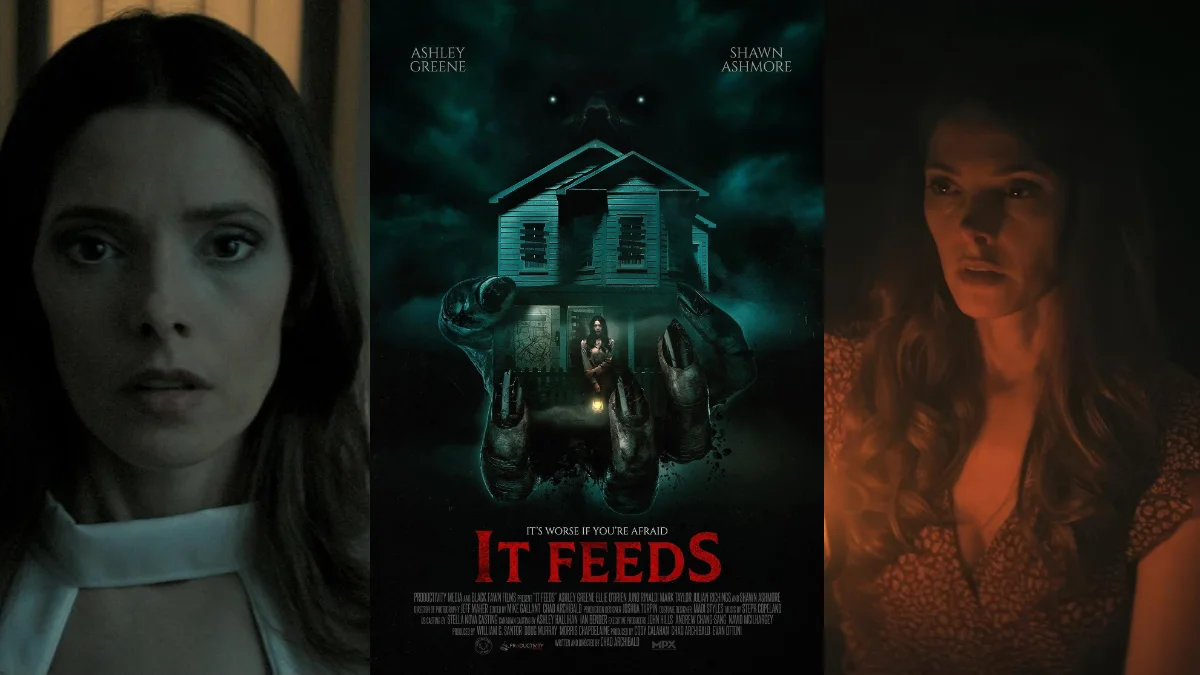
It Feeds follows therapist and psychic Cynthia Winstone as she encounters a malevolent entity attached to a new patient, Riley, sparking a terrifying series of events. While the film delivers striking visuals and a creepy creature design, its plot suffers from disorganization and mismatched stylistic choices. Despite its flaws, the film marks director Chad Archibald as a promising talent in horror.

Cynthia Winstone (Ashley Greene) is a therapist and psychic medium who helps her patients recover from past trauma. Her daughter, Jordan (Ellie O’Brien), works as her assistant, though she’s unsure if she’s inherited her mother’s abilities. Her father, also a medium, tragically died due to negative forces.
One afternoon, a distressed girl named Riley Harris (Shayelin Martin) arrives at their home, desperate for help. Her father, Randall (Shawn Ashmore), was referred to Cynthia by a former patient, Agatha (Juno Rinaldi). While Jordan begins taking Riley’s case history, Cynthia enters the room and is immediately horrified by the entity feeding off Riley. Refusing to treat her, Cynthia is visibly shaken—relieved when Randall suddenly arrives to take his daughter away. But Jordan can’t shake the encounter, and what follows is a dark and dangerous confrontation with both supernatural and human threats.
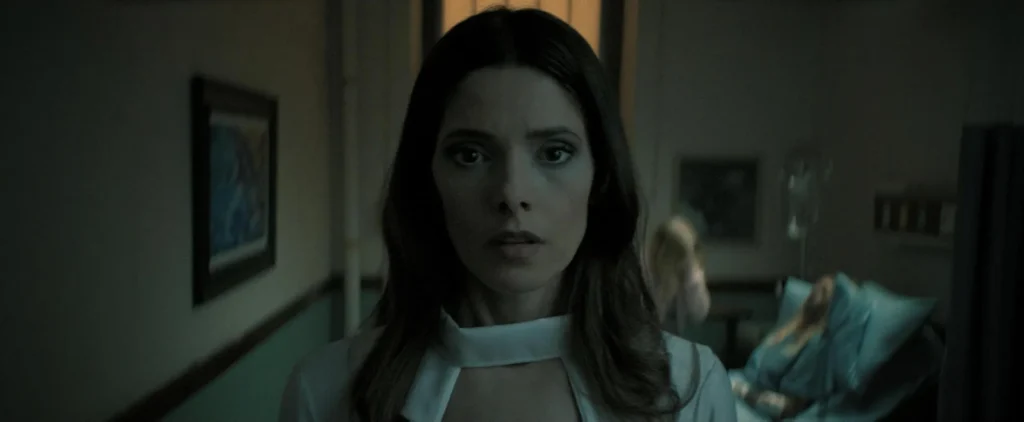
Writer and director Chad Archibald shows promise in the horror space with It Feeds. While the film has moments of tension and visually striking effects—particularly the demonic entity, which is genuinely unnerving for horror newcomers—the narrative often feels cluttered and chaotic. It tries to juggle too many elements, losing focus in the process.
One major distraction is the baffling costuming. In pivotal scenes—especially during confrontations with the entity—the Gothic wardrobe choices for Cynthia and even Riley feel out of place and unintentionally comical. These costume choices don’t serve the story and feel like a misplaced attempt at visual flair that ultimately detracts from the atmosphere.
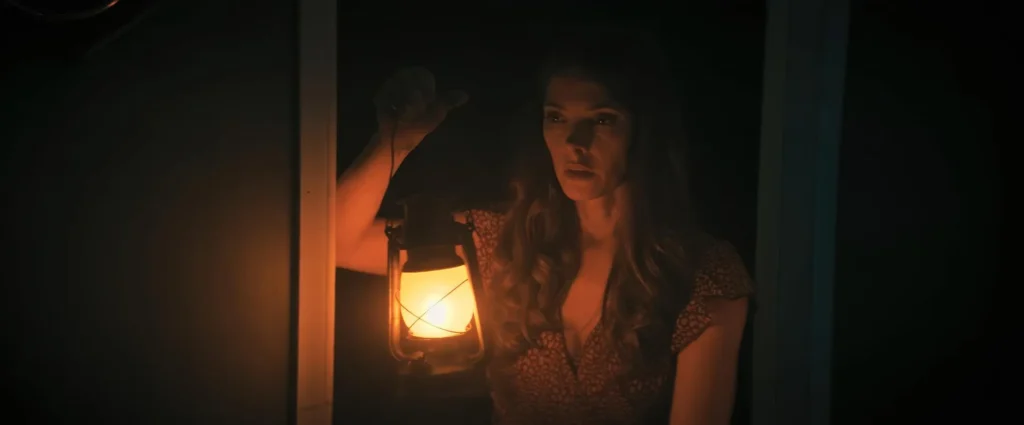
It Feeds comes across like a mix of Insidious, It Follows, and The Conjuring, tossed together in hopes of capturing that familiar formula. With a more streamlined plot and clearer direction, it could have been much more effective. The acting is decent but doesn’t particularly stand out, though the creature design is a clear highlight and arguably the strongest part of the film.
Final Verdict
While It Feeds may satisfy those new to horror, it doesn’t bring much innovation for seasoned fans of the genre. That said, Chad Archibald’s potential is clear. With a tighter script and more focused vision, his future projects could be well worth watching. I’ll definitely be keeping an eye out for what he does next.





Summary
The Woman in the Yard, directed by Jaume Collet-Serra, is a chilling psychological horror film that delves into themes of grief, depression, and emotional decay. The story follows Ramona, a grieving mother haunted by a mysterious veiled woman who symbolizes her internal anguish, as she struggles to protect her children and her sanity. Anchored by a powerful performance from Danielle Deadwyler, the film offers a deeply emotional and unsettling take on the horrors of the mind.
Jaume Collet-Serra directs The Woman in the Yard, a hauntingly dark look into the world of grief, guilt, depression, and suicide.
Ramona (Danielle Deadwyler) lies in bed watching a video on repeat of her deceased husband David (Russell Hornsby). Her teenage son Taylor (Peyton Jackson) interrupts her solemn solitude to inform her that there’s no electricity—which, to a 21st-century teen, spells doom.
Reluctantly, Ramona drags herself out of bed and is forced to confront a harsh reality: piles of unopened letters, little to no food, and a young daughter, Annie (Estella Kahiha), craving attention. Isolated in a farmhouse, with dead phones and a car that won’t start, things only get more unsettling when Ramona encounters the woman in the yard—a black-veiled entity (Okwui Okpokwasili) who cryptically tells her, “Today is the day.” Confused and frightened, Ramona watches as this mysterious figure begins inching closer and closer to the house, while tensions inside continue to boil. What follows is a harrowing fight for the lives of her children, her sanity, and her own survival.
The Woman in the Yard delves into grief and the darkest recesses of the mind with unsettling precision. It explores depression and the yearning for an end to suffering when hope feels lost. Beneath the surface of horror lies a deeper story—this is a film about the horror that lives inside us. The veiled woman is a physical manifestation of despair, creeping ever closer, feeding on pain, and extinguishing light.
Danielle Deadwyler is brilliant as Ramona. You feel the weight of her grief radiating off the screen—her dreams gone, her guilt consuming her, her frustration overflowing. She’s blind to the fact that her children are grieving too. Peyton Jackson delivers a strong, emotionally resonant performance as Taylor, a teen forced into the role of caretaker for his younger sister while their mother slips further away.
Director Jaume Collet-Serra (Orphan, The Shallows, House of Wax) does a phenomenal job bringing the essence of depression to life on screen. And Okwui Okpokwasili, as the mysterious woman, is the very definition of eerie.
Final Verdict
The Woman in the Yard carves its own path in the horror genre. It’s an exploration of the mental darkness we often try to ignore—raw, thought-provoking, and chilling. If you love horror with emotional depth, this one is a must-watch.
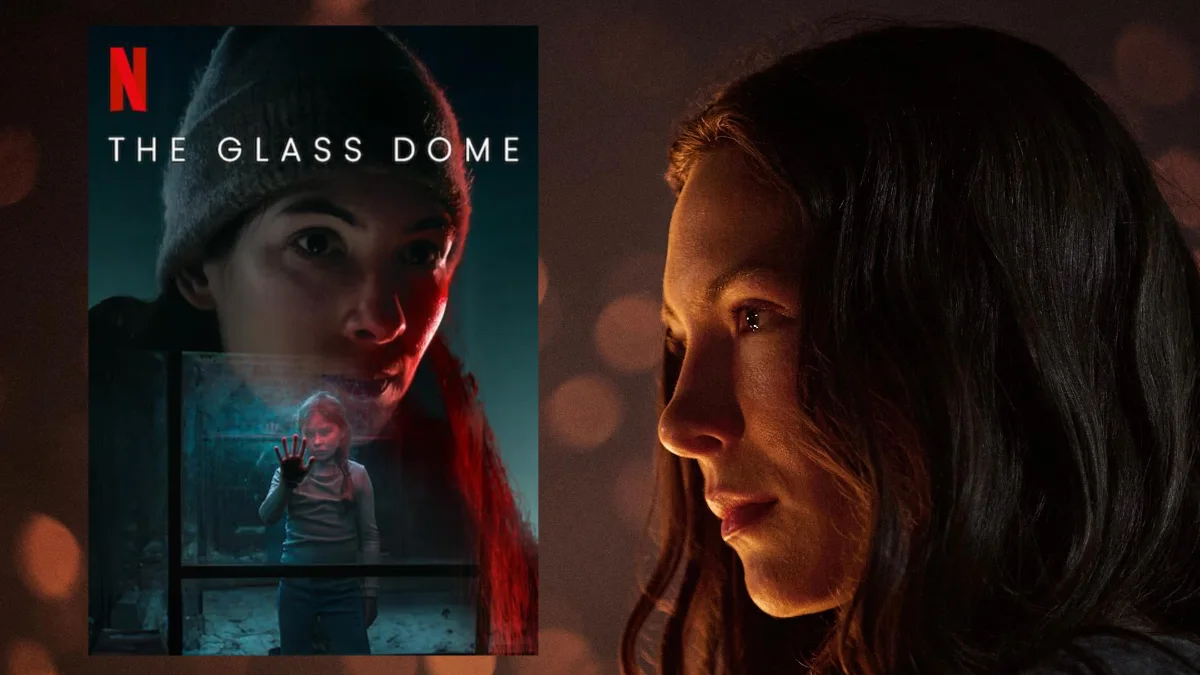
Summary
The Glass Dome is a Swedish mini-series centered on Lejla, a traumatized criminologist who returns to her hometown and becomes entangled in a chilling mystery involving a missing child and echoes of her own abduction. As the story unfolds, the psychological thriller intensifies with twists, strong performances, and haunting Scandinavian scenery. A gripping Nordic drama, it balances emotional depth with atmospheric suspense, making it a standout recommendation for horror and mystery fans
The Swedish mini-series The Glass Dome follows Lejla (Leonie Vincent), a criminologist who returns from the United States to her small hometown of Grånas, Sweden, for the funeral of her adoptive mother. Lejla’s past is marked by deep trauma—she was abducted as a child and held captive for nearly a year before managing to escape. During her disappearance, her biological mother died by suicide, overwhelmed by grief. Lejla was then adopted by Valter (Johan Hedenberg), the police investigator who handled her case, and his wife Anne-Marie.
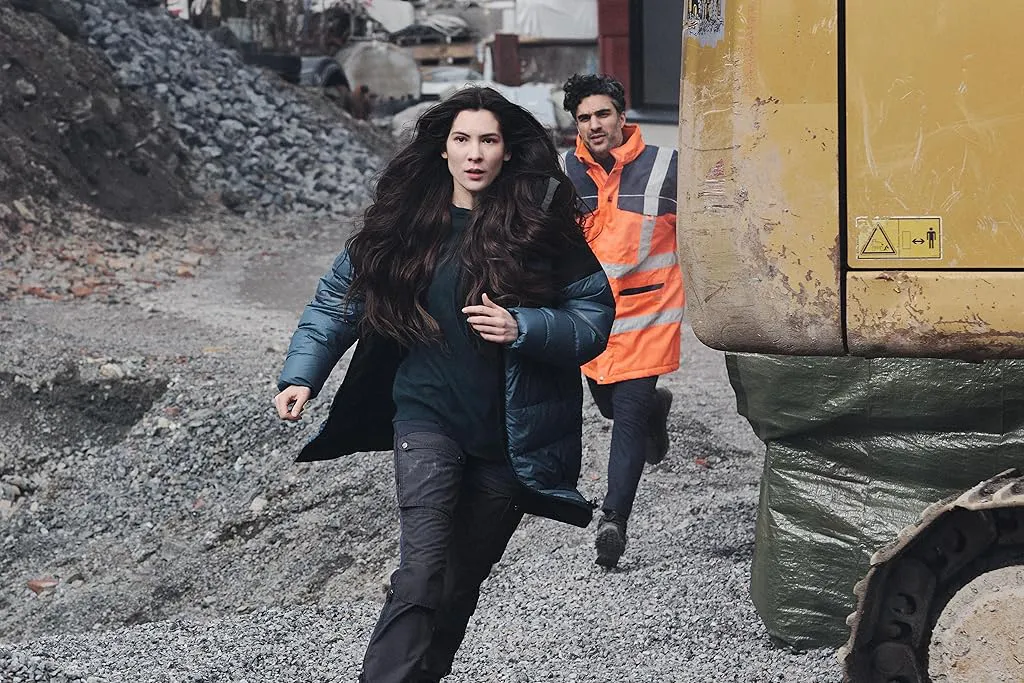
Upon returning home, Lejla finds the community in turmoil. The expansion of a local mine, managed by Said (Farzad Farzaneh), has sparked environmental and social unrest. Things take a darker turn when Said’s wife and Lejla’s childhood friend, Louise, is found dead—an apparent suicide. But their young daughter Alicia (Minoo Andacheh) has also gone missing and when her neatly folded clothes are discovered at the entrance to one of the mines, it becomes clear that she’s been abducted.
Initially, suspicions fall on upset locals seeking revenge for the mine’s environmental damage—especially when Louise’s death is ruled a staged suicide. But when another girl disappears, Lejla begins to fear that her own childhood captor may be at large once again. With the help of her adoptive father Valter and her enigmatic uncle Tomas (Johan Rheborg), Lejla races to uncover the truth before it’s too late.
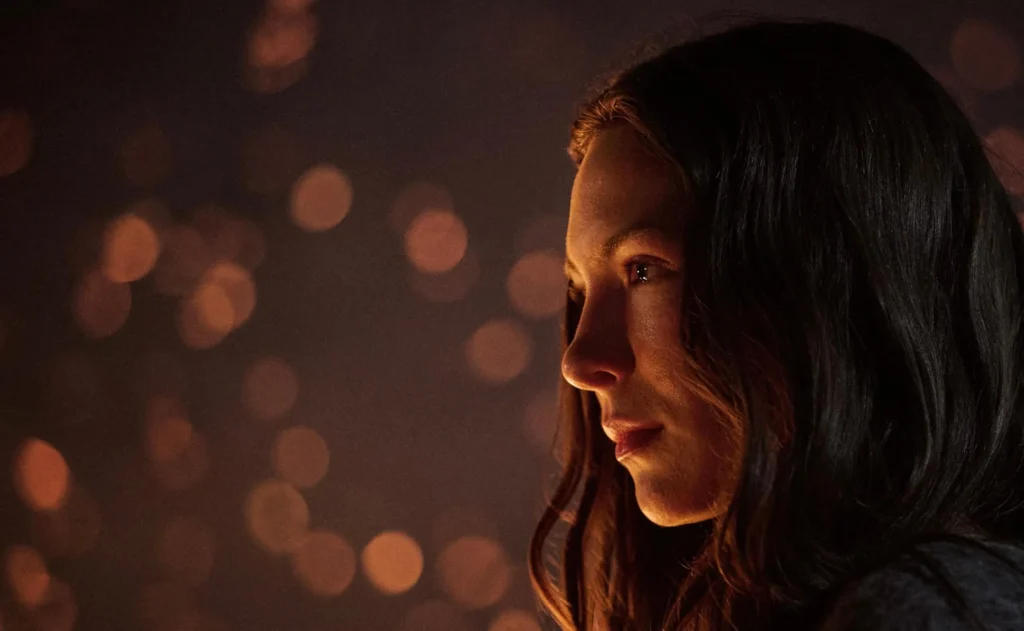
This Nordic thriller, with its eerie atmosphere and psychological horror elements, is absolutely riveting. The narrative is rich with twists and turns—just when you think you’ve figured it out, the story pivots in a new direction. But it never feels convoluted. Every piece fits together in a chilling but satisfying conclusion.
The acting is exceptional. Vincent delivers a compelling performance as Lejla, skilfully portraying a woman haunted by her past yet determined to save others from a similar fate and in conclusion resolve her own ghosts. Rheborg and Hedenberg are equally strong in their roles, grounding the series in emotional authenticity. The haunting tone, paired with bleak and beautiful Scandinavian landscapes, adds to the overall atmosphere of quiet dread.
Final Verdict
While The Glass Dome is not a traditional horror series, it’s a must-watch for horror lovers. Its psychological undertones, unsettling mystery, and suspenseful pacing slot it perfectly into the more subtle realms of the genre. Nordic thrillers rarely disappoint, and this one is no exception. Plus, for those who shy away from subtitles, it’s available dubbed in English on Netflix. Don’t miss it.
Summary
Dead Mail is a noir-inspired indie horror film set in the 1980s, following a kidnapped man whose plea for help reaches a postal investigator. While the film successfully captures the visual style of the era, it lacks originality and emotional engagement. Despite strong poster art and a creepy performance by John Fleck, the reviewer ultimately found the film disappointing.
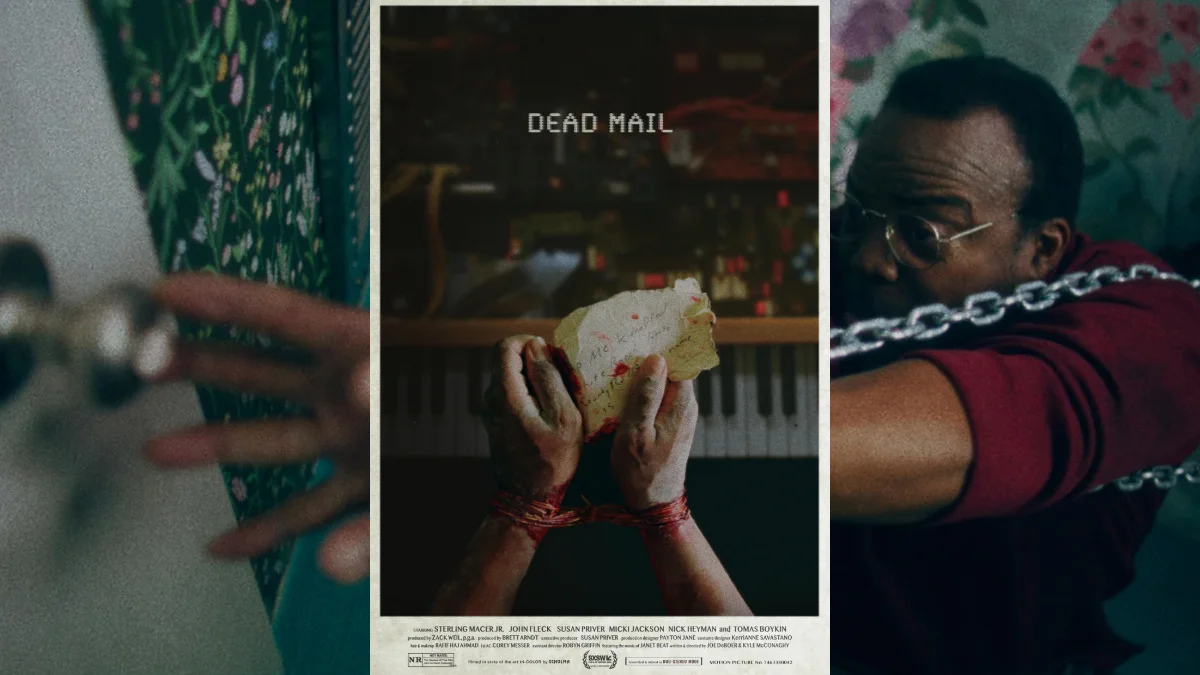
Dead Mail follows Josh (Sterling Macer Jr.), a kidnapped keyboard technician who manages to slip a desperate note for help into a mailbox just before being knocked unconscious by his captor, Trent (John Fleck). That note ends up in the hands of a dead letter investigator at the post office, setting the story in motion. The film, set in the 1980s, embraces the era with a visual style that mimics the grainy texture of movies from that time.
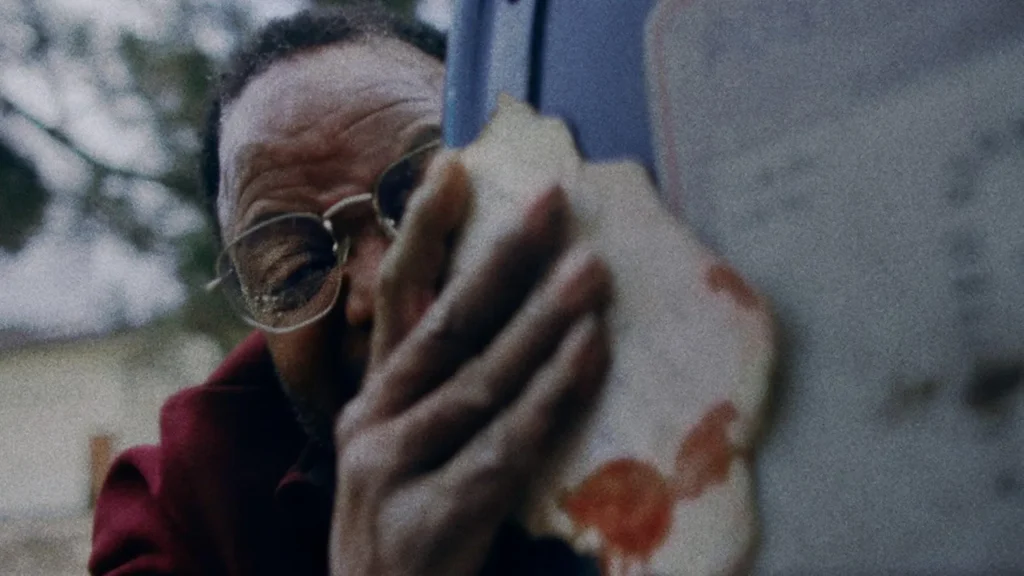
Now, don’t get me wrong—I love the ’80s. That was my time. And the decade gave us a treasure trove of horror films that still hold up today. But if I want to watch an ‘80s horror movie, I’ll revisit the classics. I don’t need a modern imitation that doesn’t offer anything new.
Written and directed by Joe DeBoer and Kyle McConaghy, Dead Mail unfortunately brings little innovation to the horror genre. It’s an indie film that, for me, fell flat. I genuinely tried to find something redeeming about it, but it just didn’t land. The acting was average, the storyline lacked intrigue, and I never felt truly invested in what was unfolding on screen.
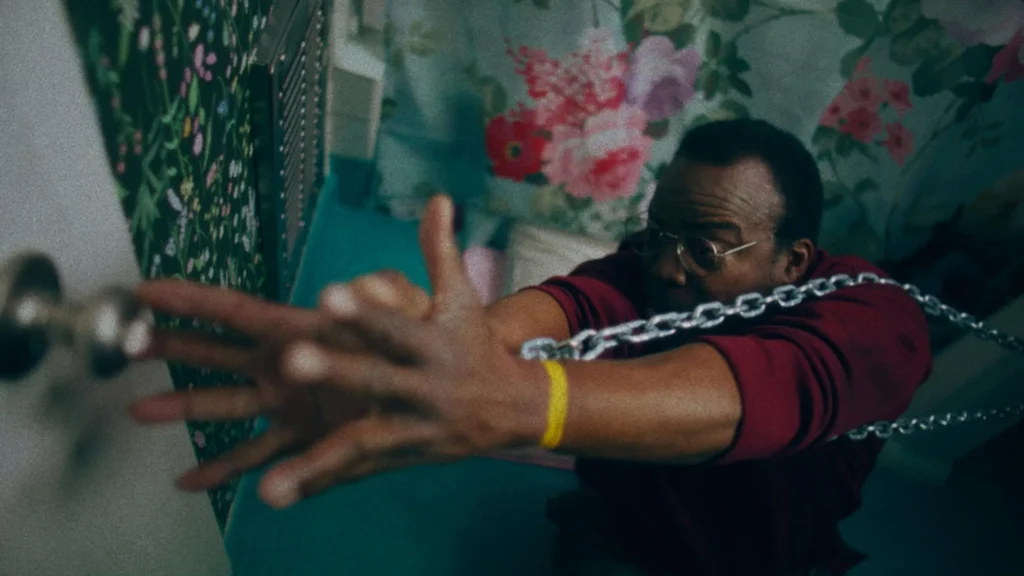
That said, the poster art was fantastic—it did its job in grabbing attention and creating initial curiosity. And to be fair, getting a film made is no small feat. I’m not denying that DeBoer and McConaghy have talent, and with a stronger, more developed story, I believe they could deliver something much more impactful. I would still give another one of their films a chance in the future.
For some viewers, the noir-horror hybrid approach may appeal. The effort to recreate the feeling of an old film was well executed, and John Fleck certainly brings a creepy energy to the screen. But for me, it wasn’t enough to elevate the film into something memorable.
Final Verdict
I wouldn’t waste my time. While I fully support indie film making and often find hidden gems in the genre, Dead Mail just isn’t one of them. I walked away disappointed.

 review1 year ago
Incantation 2022 Horror Movie on Netflix
- review1 year ago
Salem’s Lot (2024): a Review
- on disc1 year ago
Second Sight’s 4K Release of The Hitcher
- news1 year ago
Witchboard Remake Terrifies Audiences
- review1 year ago
Les Chambres Rouges (Red Rooms)
- on disc1 year ago
Village of the Damned 4K: A Chilling Classic Reborn
- review1 year ago
SAW X (2023) – A Worthy Sequel That Revitalizes the Franchise
- review1 year ago
A Mind-Bending Masterpiece of Stop-Motion Nightmare